Current Events :
















Fresh satellite imagery has provided one of the clearest indications yet that China’s next-generation KJ-3000 Airborne Early Warning and Control (AEW&C) aircraft could be moving towards serial production, potentially giving Beijing a further boost in its growing airborne surveillance network, Times of India reported.
Images captured on 5 October show four KJ-3000 aircraft at the Xi’an-Yanliang aviation complex. Three aircraft were photographed near facilities operated by Xi’an Aircraft Company, while a fourth was observed at the nearby China Flight Test Establishment.
The presence of four aircraft at a single location has prompted assessments that the program may be progressing beyond the prototype phase and towards low-rate or serial production. While some analysts have urged caution, noting that the aircraft could still be previously identified prototypes gathered together at the same site, the imagery nevertheless highlights the rapid pace at which China continues to expand its airborne command-and-control capabilities.
Also known as the KJ-20, the KJ-3000 is based on the Y-20B strategic transport aircraft and is powered by indigenous WS-20 turbofan engines. The aircraft is distinguished by its large circular radar dome mounted above the rear fuselage, an aerial refuelling probe above the cockpit, and an extensive suite of sensors and communications equipment designed to support long-range surveillance and battle-management missions.
The aircraft first emerged publicly in late 2024 when low-quality photographs surfaced online. More detailed imagery followed in 2025, revealing additional design features and confirming ongoing flight testing. The Pentagon’s 2025 assessment of Chinese military developments also noted the aircraft’s initial flight, underlining the significance of the project.
The KJ-3000 is intended to overcome limitations in China’s existing fleet of larger AEW&C aircraft. Only four KJ-2000 platforms, which were based on the Russian Il-76MD airlifter, were ultimately completed. The new aircraft offers China a domestically produced alternative that is free from reliance on foreign airframes and engines.
Beyond self-reliance, the larger Y-20B platform is expected to provide improvements in endurance, altitude performance, power generation and mission flexibility. The aircraft’s size allows it to carry more advanced sensors, additional operators and greater computing capacity, making it better suited to long-duration command-and-control missions across vast areas of the Indo-Pacific.
China already fields one of the world’s largest AEW&C fleets. More than 70 such aircraft are believed to be in service across the People’s Liberation Army Air Force and the People’s Liberation Army Navy.
The backbone of that fleet is the KJ-500, a smaller platform based on the Y-9 transport aircraft, itself derived from the Soviet-era An-12 design. The KJ-500 has been produced in substantial numbers and forms the core of China’s airborne surveillance coverage.
The expanding Chinese inventory stands in sharp contrast to India’s much smaller airborne early warning capability. Despite years of investment, the Indian Air Force currently operates only six AEW&C aircraft, a figure widely regarded as insufficient for maintaining continuous surveillance across both its northern and western sectors simultaneously.
India’s first dedicated capability came through the Israeli-developed Phalcon system mounted on Russian-built Il-76 aircraft. Under a 2004 agreement involving Israel and Russia, three aircraft were acquired.
The first Phalcon entered service in 2009, with the remaining two inducted over the following years. Equipped with a rotating radar dome providing full 360-degree coverage, the aircraft significantly enhanced India’s airborne surveillance reach. However, a fleet of just three aircraft has always limited operational availability and persistence.
In parallel, India pursued an indigenous solution through DRDO’s Centre for Airborne Systems. The resulting NETRA MK-I program was developed using the Brazilian Embraer EMB-145 platform and incorporated an indigenous Active Electronically Scanned Array radar housed within a dorsal radome.
Unlike the Phalcon, the NETRA MK-I offers approximately 240-degree coverage. The first aircraft flew with its mission systems in 2011, while the Indian Air Force received deliveries in stages during 2017, 2019 and 2023.
The platform has since undergone further refinement. On 25 June 2026, DRDO received Final Operational Clearance following the integration of additional electronic support measures and radar warning receivers. The aircraft have already gained operational experience during both the Balakot air strikes and Operation Sindoor.
As of October 2026, the Indian Air Force operates three Phalcon aircraft and three NETRA MK-I platforms. Despite these assets, the service is widely assessed to require at least 18 AEW&C aircraft to adequately support its operational commitments.
India’s next major step is the NETRA MK-II program. This effort centres on six Airbus A321 aircraft acquired from Air India, which are being transformed into larger and more capable airborne surveillance platforms.
In July 2026, DRDO’s Centre for Airborne Systems signed an agreement with AI Engineering Services Limited to prepare the aircraft for military conversion. A separate contract appointed Adani Defence Systems and Technologies as the development-cum-production partner responsible for mission systems integration.
Under the program structure, Airbus Defence and Space will return the modified aircraft after conversion work, allowing Indian teams to install and test the indigenous surveillance equipment and associated mission systems.
The Indian Air Force is also looking beyond the six NETRA MK-II aircraft. In January 2026, it issued a request for information covering six additional AEW&C platforms.
The requirement calls for aircraft capable of operating for at least ten hours, with either extended endurance or aerial refuelling capability, high-altitude performance and full 360-degree radar coverage.
For India, the challenge is no longer solely technological. While indigenous programs continue to advance, China’s ability to field large numbers of airborne surveillance platforms is increasingly creating a numerical advantage.
As Beijing expands a fleet already exceeding 70 AEW&C aircraft and prepares to introduce the more capable KJ-3000, New Delhi faces mounting pressure to accelerate acquisitions and indigenous development efforts if it is to narrow the gap in airborne situational awareness and command-and-control capacity.
Agencies

India has taken a significant step towards the future of air defence with the successful demonstration of the Defence Research and Development Organisation’s indigenous 30-kilowatt Laser Directed Energy Weapon (DEW) MK-II(A), known as Sahastra Shakti.
Designed to neutralise hostile drones and aerial swarms through concentrated laser energy, the system represents far more than a technological achievement. It highlights India’s growing ability to counter rapidly evolving aerial threats while reducing dependence on traditional missile-based interception systems.
The demonstration underscores the changing character of warfare, where relatively inexpensive unmanned aerial vehicles, loitering munitions and coordinated drone swarms are increasingly challenging conventional air defence networks. As conflicts around the world have shown, drones can threaten military installations, critical infrastructure, radar sites and forward-deployed forces at a fraction of the cost of traditional aircraft.
Against this backdrop, Sahastra Shakti offers India a new layer of protection within its air defence architecture. Unlike conventional weapons that rely on kinetic interceptors, the laser system uses focused energy to engage targets at the speed of light. This allows operators to detect, track and destroy hostile drones within seconds, significantly reducing response times against fast-moving or massed aerial threats.
The DEW MK-II(A), or Sahastra Shakti, incorporates a 30-kilowatt laser generated through six 5-kilowatt sources and is capable of engaging targets at ranges of up to five kilometres. The system is designed to neutralise fixed-wing unmanned aerial vehicles, swarm drones, surveillance sensors and antennae through structural thermal damage or by blinding hostile sensors.

Targets can be engaged instantaneously at the speed of light after detection and tracking through radar or an integrated electro-optical/infrared system. Each engagement consumes only a small amount of fuel-equivalent energy, making it a highly economical alternative to conventional interceptor missiles.
Mounted on heavy-duty multi-axle military trucks, the weapon can be rapidly deployed to operational areas. Successfully demonstrated at the National Open-Air Range in Kurnool, Andhra Pradesh, the system places India among a select group of nations possessing operational high-power laser weapon capabilities for counter-drone and air-defence missions.
The DRDO-developed system demonstrated its ability to neutralise hostile drones and aerial swarms using a concentrated laser beam. The successful trial marks an important milestone in India’s wider directed-energy weapons programme and reflects years of indigenous research into high-energy laser technologies.
The strategic value of such systems extends well beyond drone destruction. Directed-energy weapons are increasingly viewed as an essential component of future air defence networks because they provide precision engagement with minimal collateral damage. Laser weapons can target sensitive areas of an aircraft or drone, disable onboard sensors, damage electronics or structurally weaken the platform without the need for explosive warheads.
An equally important advantage is cost efficiency. Traditional air defence missiles are often expensive and can cost substantially more than the low-cost drones they are tasked with intercepting. In contrast, a laser weapon primarily consumes electrical power for each engagement, making it a potentially economical solution against large-scale drone attacks and saturation tactics.
The emergence of drone swarms has become a particularly serious concern for military planners worldwide. Swarms can overwhelm conventional defences by approaching a target simultaneously from multiple directions. Systems such as Sahastra Shakti are being developed specifically to address this challenge by providing rapid and repeated engagements without concerns associated with missile inventory depletion.
Reports from previous DRDO demonstrations have indicated that the system can track and engage unmanned aerial vehicles while employing advanced electro-optical tracking and beam-directing technologies. Such capabilities are essential for defending high-value military installations, air bases, ammunition depots and strategic infrastructure against increasingly sophisticated airborne threats.
The weapon’s mobility further enhances its operational value. Mounted on a mobile platform, the system can be rapidly deployed to vulnerable locations and integrated with existing surveillance and air defence assets. This flexibility is particularly important given the evolving threat environment along India’s land borders and maritime approaches.
The weapon also forms part of DRDO’s broader Integrated Drone Detection and Interdiction System family, which is designed to provide layered protection against emerging aerial threats.
The DEW MK-II(A) also reflects India’s determination to master critical technologies that are currently possessed by only a small group of countries. High-energy laser weapons require expertise across several advanced disciplines, including beam control, thermal management, target tracking, electro-optical systems and power generation. Successful integration of these technologies demonstrates substantial progress in India’s indigenous defence-industrial capabilities.
From a strategic perspective, the successful demonstration signals India’s intent to develop layered and technologically advanced air defence systems capable of addressing both current and future threats. The development also carries long-term significance for future battlefield operations.
With Sahastra Shakti, India has demonstrated that directed-energy weapons are moving from experimental concepts towards practical operational systems. The successful 30-kilowatt laser trial therefore represents not only a breakthrough in counter-drone capability but also a broader step towards strengthening national airspace security through indigenous, high-precision and cost-effective defence technologies.
IDN (With Agency Inputs)

India’s Defence Research and Development Organisation (DRDO) appears to be taking important steps towards the development of an airborne high-energy laser weapon system, signalling a significant advance in the country’s directed energy weapon ambitions.
India defence updatesRecent procurement activity indicates that DRDO has initiated development efforts focused on several critical subsystems required for an airborne laser platform. These include laser pod units, an airborne battery system and a gimballed pod designed to stabilise, track and accurately direct a laser beam towards aerial targets.
According to information highlighted in the infographic, a tender dated 5 October 2026 was issued for two laser pod units. A separate tender has also been floated for an airborne battery system, suggesting that energy storage and power management are among the key technological challenges being addressed as part of the project.
The proposed system is expected to employ a high-energy laser powered by advanced battery technology. Such a configuration would allow an aircraft to carry and operate a directed energy weapon without relying solely on onboard engine-generated power, while also supporting rapid energy delivery during engagement.
Another notable aspect of the project is the development of a gimballed pod. This mechanism would enable the laser beam to remain stabilised and precisely aimed even while the host aircraft performs manoeuvres at high speed. Maintaining beam quality and accuracy is considered one of the most demanding technical requirements for airborne laser systems.
The aircraft platform intended to carry the laser has not yet been publicly confirmed. This has fuelled speculation across defence circles regarding whether the system could eventually be integrated with a fighter aircraft, a large surveillance platform, a transport aircraft or another specialised airborne asset. No official announcement has been made regarding the final host platform.
The emergence of these tenders comes as DRDO continues to expand its directed energy weapon portfolio. In recent years, India has demonstrated increasing progress in ground-based laser systems designed to neutralise drones, sensors and other aerial threats.
Airborne laser weapons represent a far more complex challenge because they require compact power sources, advanced cooling systems, precision tracking and efficient beam control within strict size and weight constraints.
Experts believe airborne lasers could eventually provide a highly responsive defensive capability against hostile drones, loitering munitions and, in the longer term, certain classes of incoming missiles. Unlike conventional interceptors, laser weapons engage targets at the speed of light and can potentially offer a significantly lower cost per engagement once operational.
The apparent focus on battery systems, power conversion equipment and beam-directing pods suggests that DRDO is presently concentrating on the enabling technologies required to make an airborne laser practical. Such systems must generate and manage substantial electrical power while simultaneously dissipating large amounts of heat generated during operation.
The project also reflects a broader global trend. Several major military powers are investing heavily in airborne directed energy weapons as part of future air-defence and self-protection architectures. Successful deployment of an operational airborne laser would place India among a select group of nations pursuing advanced airborne directed energy capabilities.
While many technical hurdles remain before such a weapon can enter service, the latest development activity indicates that foundational work is underway. The combination of laser pods, specialised battery systems and stabilised beam-control mechanisms points towards a structured effort to create an indigenous airborne laser capability capable of supporting future Indian military operations.
he Ministry of Defence (MoD) has made Aadhaar-based authentication mandatory for veterans and their dependents to avail benefits under the Ex-servicemen Contributory Health Scheme (ECHS) and other welfare schemes of the Kendriya Sainik Board (KSB).
Two separate notifications issued earlier this month by the Department of Exservicemen Welfare in the MoD state that the use of Aadhaar number to establish identity will enable individuals to receive subsidies, benefits and services in a convenient and seamless manner, obviate the need for multiplicity of documents to establish identity, simplify processes and promotes transparency and efficiency.
Aadhaar credentials will now be required for grant of ECHS membership on retirement, availing ECHS facilities at polyclinics, service hospitals and empanelled Hospitals and for various other functions such as processing of claims related to ECHS beneficiaries, and also for availing financial assistance from the Raksha Mantri Ex-Servicemen Welfare Fund (RMEWF).
“An individual desirous of availing of the said benefit under the said scheme shall be required to undergo authentication, or furnish proof of possession of Aadhaar number,” the two notifications state. “In case such an individual has not been assigned an Aadhaar number, he shall be required to make an application for enrolment,” they add.
The expenditure of ECHS and RMEWF is met by the Central Government from the Consolidated Fund of India, the administration of which, under rules, requires beneficiaries to possess an Aadhaar number.
The documents also state that in accordance with the provisions of the Aadhaar (Enrolment and Update) Regulations, 2016, the KSB, which is part of the DESW, shall ensure enrolment of such beneficiaries who are yet to be enrolled, or update their Aadhaar details through appropriate measures, including coordination with registrars and setting up enrolment centres at convenient locations or providing enrolment facilities by becoming a registrar itself.
The notifications, however, make it clear that till the time fresh applicants are assigned an Aadhaar number, they can continue to avail the benefits by establishing their identity by presenting the specified valid documents to which they are entitled to. These include driving licence, passport, ration card, elector’s voter card, matriculation certificate and overseas citizen of India card.
The documents also explicitly state that benefits under the said schemes shall not be denied to a child in case of failure to establish his identity by undergoing authentication or to furnish proof of possession of Aadhaar number, or in case of production of an application for enrolment where he has not been assigned an Aadhaar number.
“The benefit under the said scheme shall be given to such a child by verifying his identity and establishing his relationship with his parent or legal guardian in the manner specified, and where benefit is given, a record shall be maintained in respect of the same, which shall be reviewed and audited periodically by the KSB,” it states.
Further, in order to ensure that bona fide beneficiaries who are aged eighteen years or more are not deprived of the benefit due to them under the said scheme, the KSB shall follow the exception handling mechanism as specified in the central government’s memorandum of the Direct Benefit Transfer Mission.
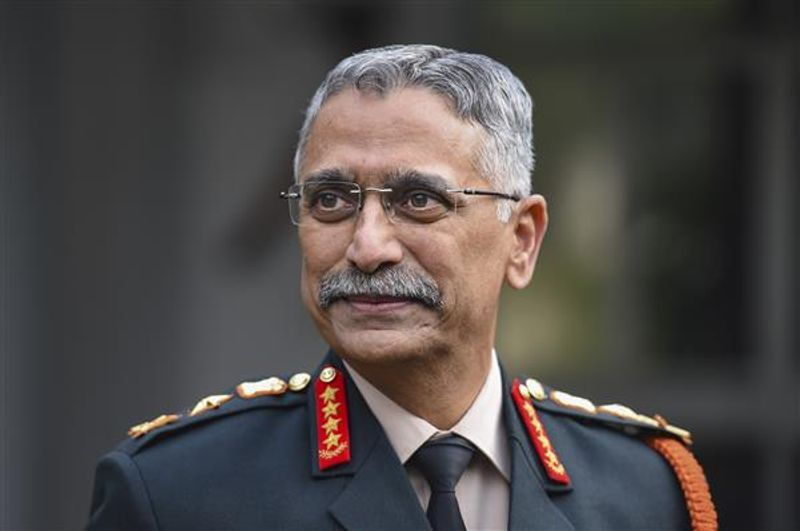
After Indo-Tibetan Border Police (ITBP) Director General Shatrujeet Kapur flagged face-offs with Chinese forces along the Line of Actual Control (LAC) in Arunachal Pradesh, saying they were still continuing, former Army Chief General Manoj M. Naravane (retd) said such face-offs were “not new” and had occurred in the past as well, given that the border between the two countries had not been formally demarcated.
General Naravane was the Army chief at the time of the Galwan clash in eastern Ladakh in June 2020, which left 20 Indian soldiers dead, while China acknowledged the deaths of four of its soldiers.
Speaking to The Tribune on the sidelines of the Kasauli Lit Fest in Kasauli (Solan), he said, “You see, we have to understand that the boundary between India and the Tibet region has never been formally demarcated or formally acknowledged by either side. And therefore, there are differences in perception about where the boundary actually lies. Because of these differences in perception, there are a few such areas that have been designated as sensitive or disputed areas, where both sides carry out patrolling up to their perceived lines of actual control.”
“So whenever such patrolling takes place, there are occasions when the patrols arrive simultaneously at a particular point, resulting in what is called a face-off. So these face-offs are nothing new. They have happened in the past, and there are established protocols to follow to prevent such face-offs from escalating into anything more serious. So we should not read too much into it,” he added.
After the Congress sought an explanation from Prime Minister Narendra Modi over the ITBP Director General’s video, the Ministry of External Affairs (MEA) said on October 23 that the LAC was disturbed from time to time when the People’s Liberation Army “deviates from established patrolling patterns”.
However, the ITBP deleted its Director General’s video from its official YouTube channel.
The border skirmishes continued despite the most recent meeting between Prime Minister Modi and Chinese President Xi Jinping, which took place on September 12 on the sidelines of the BRICS summit in New Delhi.
Asked about the ITBP deleting its Director General’s video on face-offs with Chinese forces, General Naravane said, “I’m now retired. It’s been four years since I retired. I have no idea what is happening on a day-to-day basis in the border area. So it’s not possible for me to comment on this.”
Asked about the Ministry of Defence (MoD) not clearing his memoir, Four Stars of Destiny, he said the question was off the table. “I have been asked too many times. I’ve answered it twice… Nothing new to add or delete.”
Leader of the Opposition Rahul Gandhi read out passages from General Naravane’s unpublished book in the Lok Sabha on February 2 and claimed that Prime Minister Modi had abdicated responsibility during the 2020 Ladakh crisis and abandoned his Army chief.
Asked what should be the practical measure of success in boundary talks between India and China—an agreed framework, the resolution of specific disputed areas, or a final boundary settlement—General Naravane said, “You know, this boundary is nebulous; that’s why we call it a boundary. The border is very finely demarcated. There are boundary pillars on the ground, and they’re ratified as part of a bilateral agreement. None of this has happened as far as the LAC is concerned. So that is why these talks are very important. Delimitation is the first step. There’s delimitation, then there’s delineation, and then there’s demarcation. So delimitation is, you know, a conceptual framework on which the next steps are taken.”
He added, “But while all this is happening, it does not mean that we can lower our guard. I’m sure the boys today are also doing as good a job as ever.”
Asked whether the Galwan clash demonstrated that China had ruled out a military solution to the boundary dispute, he said, “See, we have always been against the unilateral use of force to alter the status quo, and that is what we demonstrated: it will not work. Now it is there for them to draw the correct lessons from it.”
Asked about the single most important operational lesson from Galwan that India had yet to fully implement, General Naravane said, “We always learn lessons all the time. Whenever you do something, there are positives. There are ways in which it could have been done better. That is a continuous process. So we cannot say it is learned and done and dealt with… You always try to improve and improve and improve, and I’m certain that those in key positions today, wherever they are, are doing their best to be able to meet all possible future challenges.”
Asked whether, in hindsight, there was any decision he would have taken differently during the Galwan situation, he said, “Not really. Whatever you do, you know, is the best in the given circumstances, and at the end of the day, the result was in our favour. So, I think all is well that ends well.”
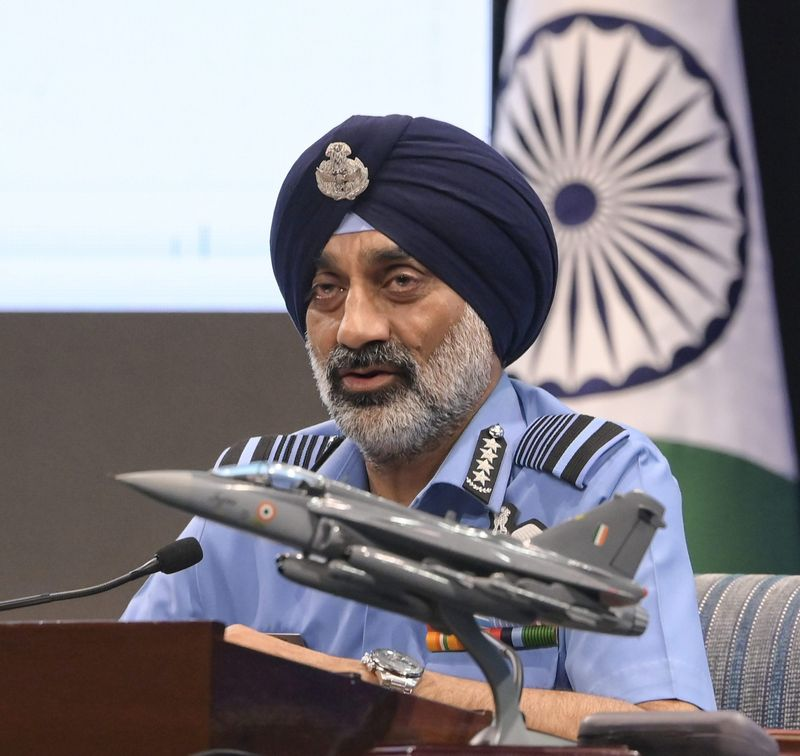
Air Chief Marshal AP Singh, Chief of the Air Staff, IAF, on Sunday spoke about the pending military reform of creating geographically carved out ‘theatre commands’, saying dividing IAF ‘fighter assets’ was not an option under the proposed structure.
The IAF Chief, who is set to retire on October 31, said India needs a structure built around its own specific security requirements rather than replicating foreign models. “We are not viewing theaterisation as an exercise to permanently divide fighter assets geographically. The IAF is fully committed to jointness and integration,” he said, outlining the IAF’s vision for the project in an interview to PTI.
“The guiding principle for theaterisation should be centralised control where necessary and decentralised execution where appropriate,” he added. AP Singh noted that the question that needed to be answered was how to employ air power to its greatest effect within an integrated structure. He argued that air power’s defining strengths were speed, reach, flexibility and ability to concentrate combat power rapidly at the point of decision.
“An aircraft is not relevant only to the geographical area from which it operates. With aerial refuelling, long-range weapons, networked sensors and appropriate basing, air power can be massed from considerable distances and shifted between sectors as the threat evolves,” said Singh.
“The guiding principle should, therefore, be centralised control where necessary and decentralised execution where appropriate. That way, air power can be concentrated where it is needed most, while commanders retain the agility to act swiftly on the ground,” added Singh.
Referring to Operation Sindoor, Air Chief Marshal Singh said it was carried out under a joint architecture established by the Chief of Defence Staff and the three service chiefs where the centralised allocation and swift reallocation of critical assets proved decisive.
“Our own experience bears this out. During Operation Sindoor, under a joint architecture established by the Chief of Defence Staff and the three service chiefs, the centralised allocation and timely reallocation of critical resources proved decisive in the outcome,” he said.
As per the theaterisation plan, each of the theatre commands will have units of the Army, the Navy and the Air Force and all of them will work as a single entity looking after security challenges in a specified geographical territory.
Former Chief of Defence Staff Gen Anil Chauhan (retd) had submitted a comprehensive proposal on the theaterisation plan to Defence Minister Rajnath Singh.Announced in 2019 as India’s most ambitious military reform since Independence, the theaterisation plan seeks to integrate the three services for greater operational synergy.

India is seeking to emerge as one of the world’s top five shipbuilding nations by 2047, with the government stepping up efforts to attract international partnerships, strengthen maritime manufacturing and develop a globally competitive skilled workforce. Against this backdrop, Union Minister for Ports, Shipping and Waterways Sarbananda Sonowal pitched India’s growing maritime opportunities to Korean industry leaders and professionals.
Sonowal, who is on a four-day visit to Busan, a major hub of South Korea’s maritime industry, interacted with Indian professionals working in the country’s shipbuilding sector, which included professionals associated with Samsung Heavy Industries, Hanwha Ocean, HD Hyundai, DNV and the Indian Register of Shipping.
“Your presence in Korea, at the heart of one of the world’s most advanced shipbuilding ecosystems, is a matter of pride for India,” Sonowal said.
He urged the professionals to view the VOYAGES framework, adopted in April during South Korean President Lee Jae Myung’s state visit to India, as more than a government-level agreement, describing it as an opportunity to advance their careers while contributing to India’s maritime ambitions.
The framework provides for cooperation between the two countries in shipbuilding, shipping and maritime logistics.
“I want you to see VOYAGES not merely as a government framework, but as a platform for your professional growth and for India’s maritime future,” the minister said.
Sonowal said India, under the country’s Maritime India Vision 2030 and Maritime Amrit Kaal Vision 2047, aims to establish itself as a globally competitive centre for shipbuilding, ship repair, maritime manufacturing and logistics. The Union Cabinet approved a series of policy incentives for the sector in September 2025 to support these ambitions.
Highlighting the need to build domestic capabilities, the minister said India would require a larger pool of shipbuilders, marine engineers, naval architects, designers, welders, project managers and technology specialists to expand its shipbuilding ecosystem.
He encouraged Indian professionals working in South Korea to bring their expertise back to India or support Indian companies from abroad, while leveraging their professional networks to strengthen industrial cooperation between the two countries.
“You can serve as living bridges between your networks in both countries,” Sonowal said.
He also urged them to mentor young Indian professionals and contribute to initiatives such as the India Ship Technology Centre and the shipbuilding skills partnership between India and the Korea International Cooperation Agency.
During the interaction, Sonowal sought practical recommendations on improving shipyard productivity and project execution, developing a globally competitive skilled workforce, and deepening bilateral cooperation in technology, manufacturing and innovation.
“We are looking for partnership with Korea in shipbuilding, shipping, ports and maritime logistics,” he said.
The minister’s visit will include meetings with leaders of major global shipbuilding companies, maritime industry bodies, think tanks and research institutions to explore avenues for greater cooperation.
Sonowal is also scheduled to participate in a ministerial roundtable in Busan to mark World Maritime Day. Representatives at the ministerial level from major maritime nations, along with the secretary-general of the International Maritime Organization, are expected to attend.
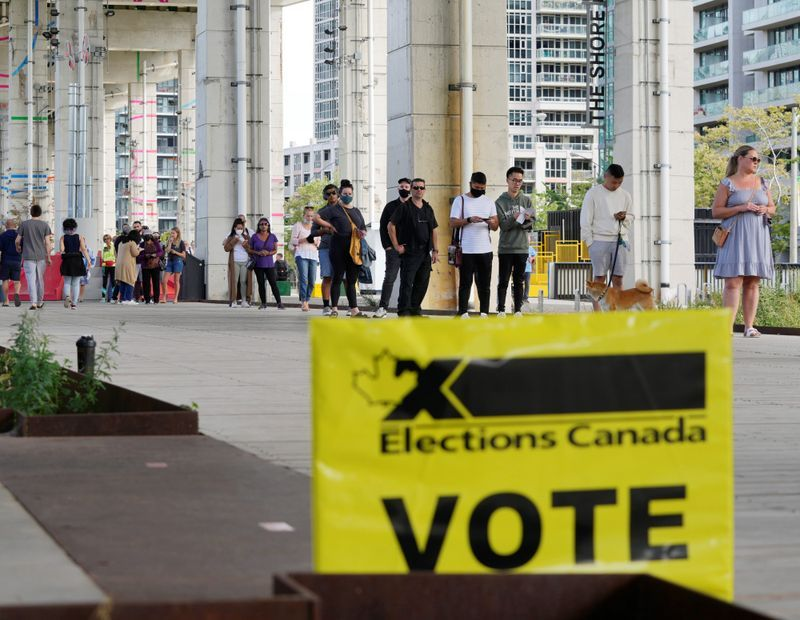
Fifteen candidates of Punjabi origin have won seats in British Columbia’s provincial election, 12 of them Conservatives and three NDP, according to preliminary tallies by Punjabi community outlets Babushahi and Punjab News Express.
The wins came on the back of a Conservative sweep of Surrey, which has one of the largest Punjabi communities outside India. “A blue wave has officially engulfed Surrey and White Rock,” the Surrey Now-Leader reported, noting that all 10 of Surrey’s ridings went Conservative.
Mandeep Dhaliwal retained Surrey North, a seat he won in 2024 by defeating NDP minister Rachna Singh. Harj Dhaliwal won Surrey-Newton, defeating NDP incumbent Jessie Sunner. According to the Surrey Now-Leader, his victory ended “many years of NDP control of the riding”.
Garry Purewal won Surrey-Fleetwood, unseating NDP incumbent Jagrup Brar, who was born in Bathinda district and had held the seat since 2004. Garry Thind won Surrey-Guildford defeating NDP incumbent Garry Begg, a week after also winning a school trustee seat in Surrey’s civic election. Zeeshan Wahla took Surrey City Centre from the NDP’s Amna Shah in a close contest, and Jessy Sahota won Surrey-Serpentine River.
Babushahi and Punjab News Express also list Harman Bhangu, Jody Toor, Steve Kooner, Monica Mohan, Pavneet Singh and Deep Sandhu among the Conservative winners. They name Raj Chouhan, Niki Sharma and Rohini Arora as the three NDP winners. Canadian mainstream outlets have not yet confirmed these nine names.
This was the provincial general election for the 93-seat BC Legislative Assembly, held on October 24. NDP Premier David Eby called it more than two years early. The Globe and Mail reported that with over 99 per cent of polls counted, the Conservatives had won 64 seats, the NDP 27 and the Greens two.
According to CBC News, it is the Conservatives’ first majority government since 1928, and Premier-designate Lorne Doerkson said, “BC is definitely blue.” Eby resigned as NDP leader, and CTV News reported him saying, “I accept full responsibility.”
Final counts are expected in early November, and the seat tally and the Punjabi-origin figure could change.
Conservative Party of British Columbia — 12
1. Mandeep Singh Dhaliwal — Surrey North
2. Dr Harjit Taliwal — Surrey-Newton
3. Jessy Sahota — Delta
4. Garry Thind — Surrey-Guildford
5. Zeeshan Wahla — Surrey City Centre
6. Harman Bhangu — Langley-Abbotsford
7. Jody Toor — Langley-Willowbrook
8. Steve Kooner — Richmond-Queensborough
9. Garry Purewal — Surrey-Fleetwood
10. Monica Mohan — Delta North
11. Pavneet Singh — Kelowna-Lake Country-Coldstream
12. Deep Sandhu — Vancouver-Fraserview
New Democratic Party (NDP) — 3
13. Raj Chouhan — Burnaby-New Westminster
14. Niki Sharma — Vancouver-Hastings
15. Rohini “Reah” Arora — Burnaby East